Listed by EAMGroup
Genre documentary, family
Original Language Portuguese
Duration 12min
Runtime 12min
Completion Year 2025
Project Status Completed
Project Type Short Film
Production Company Zajden Studios
Sales Agent EAMGroup
Cast Valderes Ferreira, Adao Ribeiro, Eva Ribeiro
Director Pedro Zajden
Producer Evelyn Zajdenwerg
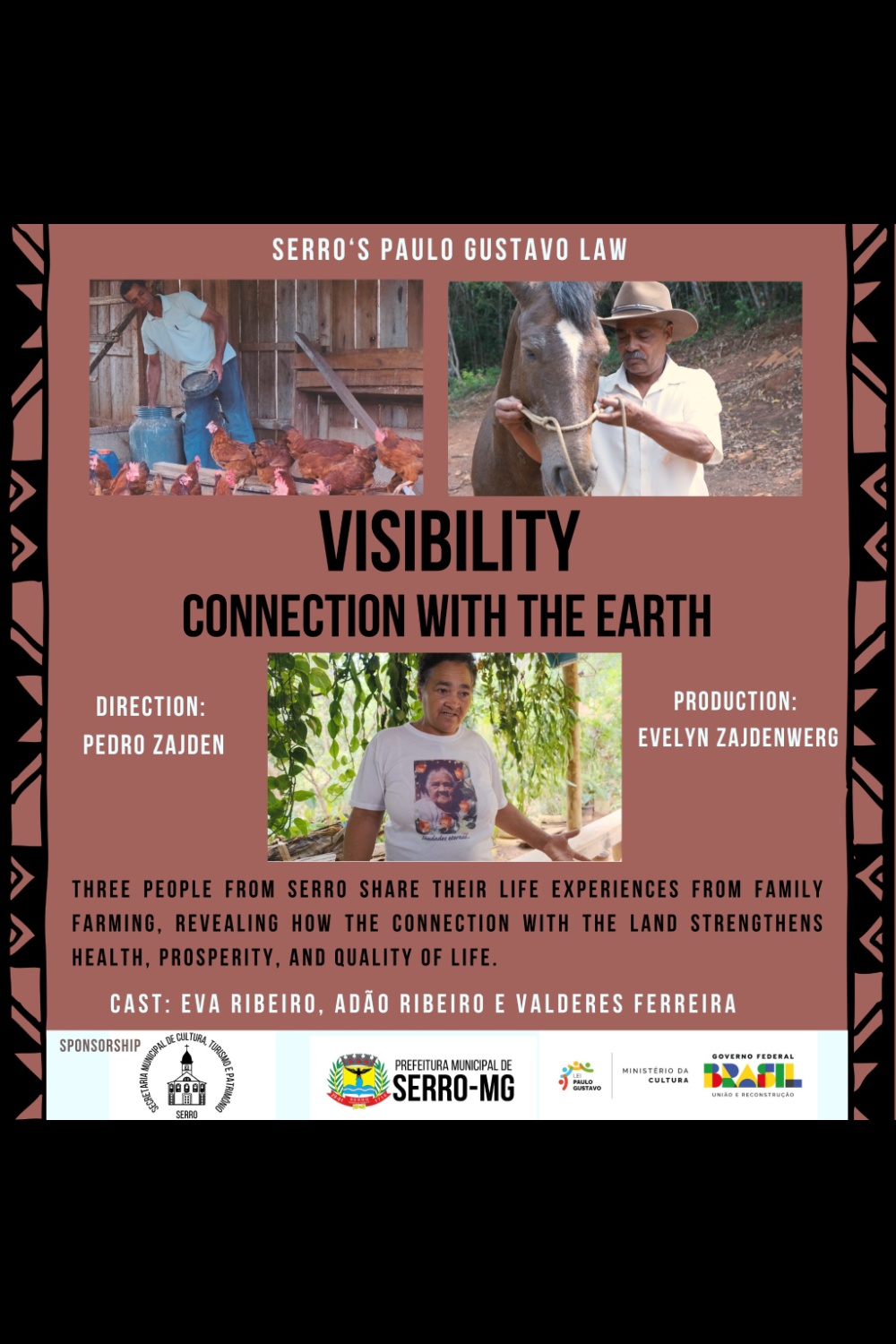
Three people from Brazil’s Quilombo of Queimadas share their experiences of family farming, ancestral knowledge, and a profound connection to the land that sustains their health, culture, community, and way of life.
Visibility is a compelling short documentary that offers an intimate look at family farming, traditional knowledge, self-sufficiency, and the changing life of a rural community. Through the experiences and reflections of a longtime farmer in the Quilombo of Queimadas, the film explores a way of life built around the land, family, food, community, and a deep respect for nature. At the center of the story is a farmer who believes that living in the countryside can provide a healthy and productive life when people understand how to work with the land. He describes raising his family without bank debt and building a life based on farming, practical knowledge, and independence. His children were raised on the farm, and one son went on to study agronomy. Yet, despite his education and life away from the farm, his heart remains connected to the land where he was raised. The film contrasts this knowledge with a younger generation that may no longer possess the practical skills required for rural life. Tasks that once formed an ordinary part of childhood and family life working with animals, gathering firewood, harvesting crops, preparing food, and understanding the rhythms of the land are increasingly unfamiliar. For the filmmaker's subject, this knowledge represents more than agricultural technique; it is a cultural inheritance that risks being lost. His farm demonstrates a highly interconnected approach to production. An orchard combines ornamental and edible plants, including acerola, lemon, mango, pineapple, banana, and plums. He raises European honey bees, chickens, pigs, and cattle, while cultivating crops for animal feed. Rather than treating each activity as separate, he describes a system in which one part supports another: cheese produces whey that can feed pigs, animal waste can be used to produce gas, and chicken manure becomes fertilizer for crops. The philosophy is simple—nothing should be wasted. Water conservation becomes another essential part of the story. The farmer recalls a severe water shortage beginning around 2007, when the local water source dried up and remained unavailable for years. With technical guidance, he constructed small dry dams designed to capture rainwater and allow it to gradually seep into the earth, replenishing the spring below. The system transformed the farm's ability to withstand drought. Instead of simply using the land's resources, he learned how to preserve and restore them. The film also explores the knowledge contained in plants. Bananas are presented not merely as food but as a remarkably useful resource, with different parts of the plant used for cooking and crafts. The farm also contains medicinal plants such as basil, ora-pro-nóbis, picão, carqueja, saffron, São Caetano, and erva-baleeira. These plants reflect a traditional understanding of the natural world in which food, medicine, agriculture, and everyday life are closely connected. For the farmer, these traditions are inseparable from family history. He remembers his parents and the communal routines of an earlier generation: roasting and grinding coffee, extracting juice from sugarcane to sweeten the drink, visiting neighboring families, making music, praying, and gathering together on Sundays. Life was organized around relationships, shared labor, hospitality, and the land. But the community is changing. The Quilombo of Queimadas, once described as a quiet and closely connected extended family, is experiencing pressures associated with the licensing of mining companies in the surrounding region. Although the community remains a place the farmer considers among the best places in the world to live, he recognizes that it is no longer exactly the same place he knew growing up. Ultimately, Visibility is a meditation on what can be learned from the land and what can be lost when that knowledge disappears. It asks viewers to reconsider the value of traditional agricultural practices, family farming, environmental stewardship, community, and self-sufficiency. Its central message is that the earth provides the essentials of life—air, sunlight, water, food, and nourishment—but humanity has a responsibility to recognize, protect, and appreciate those gifts. The film closes on a deeply personal and spiritual note. The farmer does not claim that everything he has accomplished was achieved by his hands alone. He speaks of a “Higher, Greater energy” that has guided him throughout his life and helped him recognize the value of the food, medicinal herbs, natural resources, and traditions surrounding him. Visibility ultimately presents rural life not as a relic of the past, but as a living source of knowledge, resilience, health, and cultural identity and as a possible guide for a future in which people once again understand their relationship with the land.